
An ordinary summer afternoon that didn’t stand out in any way
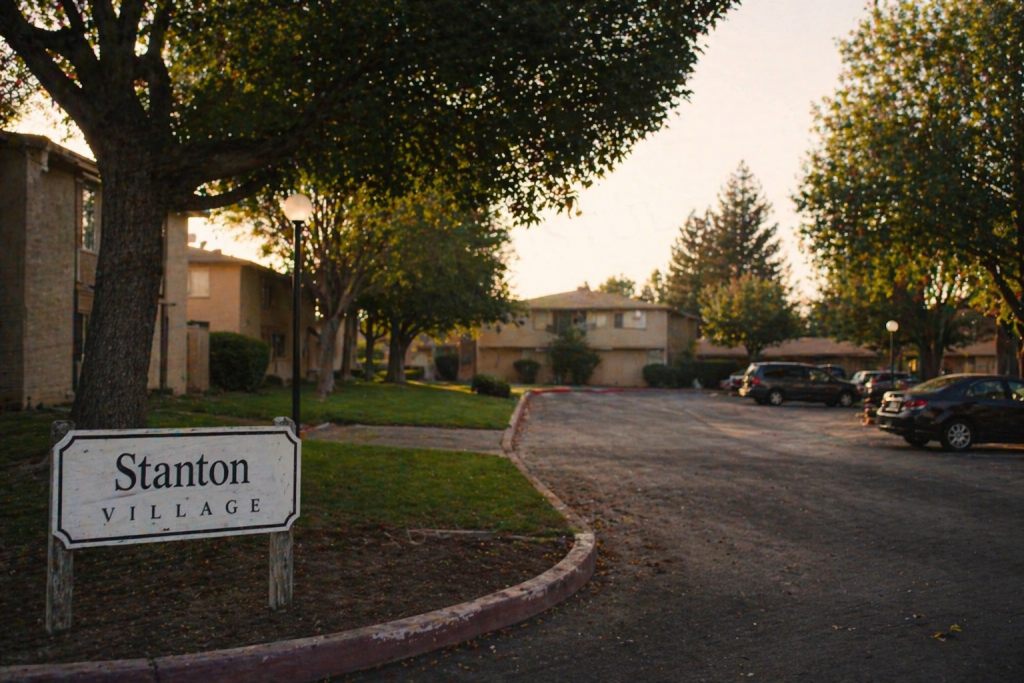
On July 15, 2002, in a residential complex in Stanton, the day moved exactly the way summer afternoons usually do. Kids were outside, riding bikes, walking in and out of apartments, playing in small groups while adults kept a loose eye on things from nearby. It wasn’t an isolated area, and it wasn’t considered dangerous. It was the kind of place where routine quietly builds trust.
Samantha Runnion was five years old. She was right there with the other children, in a space her family had every reason to believe was safe.
What happened next unfolded so quickly that, even in hindsight, it’s difficult to process how little time there was to react.
The moment everything shifted
Sometime around 5:30 p.m., a man approached the children. He didn’t come across as threatening at first, and nothing about the interaction immediately caused alarm. According to witnesses, he used a simple, familiar story—he said he was looking for a lost dog and asked for help.
That detail matters. In criminology, this kind of approach is well documented. It lowers suspicion, especially in children, and creates a brief window of trust.
Within moments, Samantha was separated from the group and pulled into a vehicle. There was no prolonged struggle, no loud escalation—just a sequence of events that moved faster than anyone nearby could fully register.
The other children were left behind, able to describe what they had seen, but unable to stop what had already happened.
The first hours: urgency and uncertainty
The disappearance was reported immediately, and law enforcement responded as a high-priority abduction. In cases like this, investigators know something difficult but critical: the first hours matter more than anything that comes after.
Search efforts began right away. Descriptions of the man and the vehicle were circulated, and the investigation moved quickly, driven by the fact that there were direct witnesses.
For the family, those first hours exist in a different kind of time. Everything accelerates externally, while internally, it becomes harder to process what is actually happening.
The discovery that changed the course of the case
Roughly 26 hours after Samantha was taken, her body was found in a rural area near Santa Ana.
At that point, the case shifted from a search-and-rescue effort to a homicide investigation.
For the community, the impact was immediate. A space that had felt ordinary and safe the day before now carried a completely different meaning. The sense of security didn’t just weaken—it broke.
The investigation and how the suspect was identified
The case moved forward quickly compared to many others, largely because of the combination of eyewitness accounts and physical evidence.
Descriptions provided by the children helped narrow the focus, while forensic analysis—particularly DNA—played a key role in confirming the suspect’s identity. By the early 2000s, DNA evidence had become an increasingly powerful tool in criminal investigations, capable of linking individuals to crime scenes with high precision.
A suspect was identified and arrested soon after the discovery. The legal process that followed led to a conviction, supported by both forensic findings and witness testimony.
From an investigative standpoint, this case is often seen as an example of how multiple types of evidence—human observation and scientific analysis—can converge to build a clear case.
What cases like this show beyond the immediate tragedy
What makes this case especially difficult to accept is not just what happened, but how it happened.
Research consistently shows that abductions by strangers are rare. But when they do occur, they tend to unfold quickly—sometimes in just a few minutes—and often begin without obvious force. Instead, they rely on familiarity, timing, and the absence of immediate suspicion.
Another important factor is response time. Quick reporting and the presence of witnesses can significantly improve the chances of identifying a suspect, even if they cannot always change the outcome.
These are patterns that appear again and again in criminological studies.
What stays after everything else is over
There was no unusual setting here. No late-night isolation. No clear warning signs.
It was a normal afternoon, in a place where people believed things were under control.
And that is what makes stories like this linger.
Not because they are complicated—but because they are so easy to imagine happening somewhere that looks just as ordinary.
Sometimes, that’s the part that stays with you the longest.