
An ordinary evening, nothing out of place
In the spring of 1986, in Gallup, life in the neighborhood moved the way it usually did. It wasn’t remote, it wasn’t considered unsafe, and there was nothing about that particular evening that suggested anything was about to go wrong.
Anthonette Cayedito was 9 years old and at home with her sisters. Their mother had gone out for a while, leaving the girls alone, something that, at the time, didn’t seem unusual in many households.
The night followed a simple pattern—quiet, predictable, uneventful.
Until it wasn’t.
The moment the silence broke
Sometime around 3 a.m., there was a knock at the door.
It wasn’t loud or violent, just enough to be noticed. According to later statements, a voice from outside said it was their “uncle” and asked to be let in.
That detail matters more than it might seem. When something is framed as familiar, especially to a child, it lowers hesitation. It doesn’t feel like a threat—it feels like something known.
The door was opened.
That is the last clearly established moment inside the house.
A morning that didn’t make sense
When their mother returned a few hours later, the situation didn’t immediately present itself as something extreme. At first, there were possible explanations—maybe she had stepped out, maybe she was nearby.
But it didn’t take long for that uncertainty to shift into something else.
Anthonette wasn’t in the house. She wasn’t nearby. And there was no clear reason why.
The disappearance was reported, and the search began.
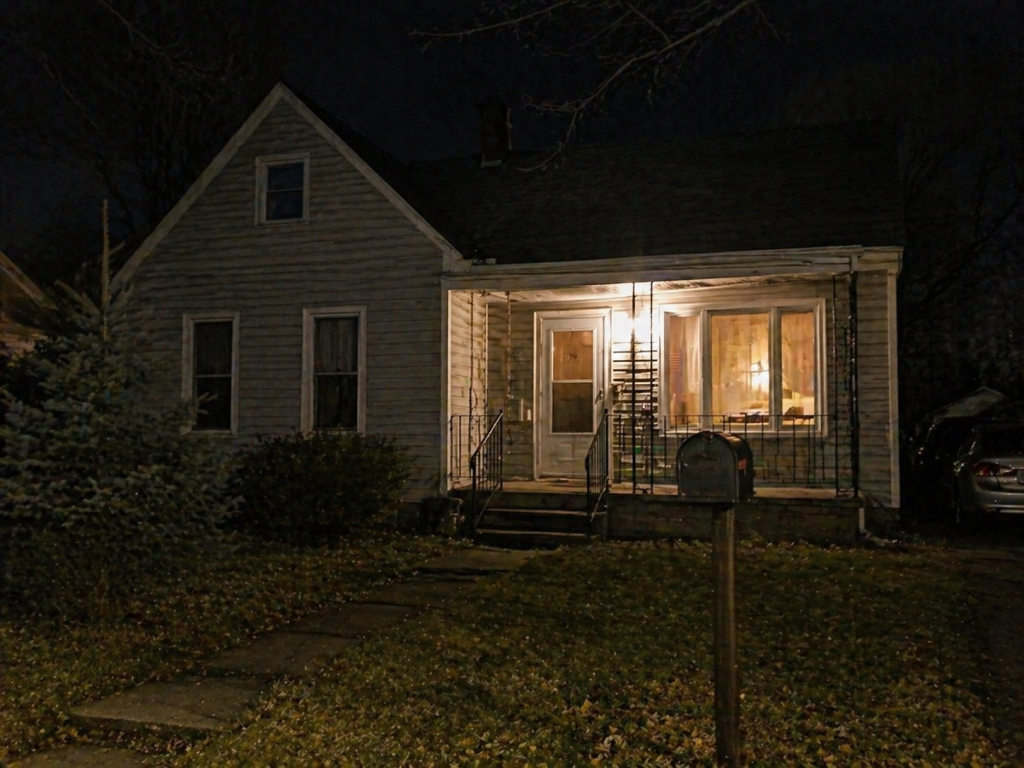
An investigation without a clear starting point
From the beginning, the case lacked something essential: a defined sequence of events.
There were no confirmed witnesses to the actual moment she left the house. No physical evidence that clearly pointed in one direction. Only fragments—what was heard, what might have happened, what could not be confirmed.
Cases like this are among the hardest to investigate. Without a solid starting point, every possibility remains open, but none can be fully proven.
The years that followed—and moments that raised questions
Over time, the case resurfaced more than once.
One of the most discussed moments was a phone call received some time later. A young voice, distressed, reportedly said, “Help me, I’m Anthonette.”
The call ended abruptly.
It was never definitively proven that the voice belonged to her, but it left a lasting impression. It introduced the possibility that the story hadn’t ended where people first assumed.
There were also reported sightings over the years—instances where someone believed they saw a girl or teenager trying to signal for help in subtle ways. None of these leads were confirmed.
What research shows about cases like this
From a scientific perspective, disappearances that occur from inside a home without clear witnesses are rare and extremely difficult to reconstruct.
Criminology often refers to something called a “familiar approach,” where a person gains access by presenting themselves as someone known or trusted. It reduces resistance, especially in children, and can happen without immediate signs of danger.
When there is no early physical evidence, the chances of resolving the case quickly drop significantly.
A story that never fully closes
The case of Anthonette Cayedito remains unsolved.
There is no confirmed explanation, no clear reconstruction of what happened that night, no moment where everything comes together.
For the family, that means living with a kind of uncertainty that doesn’t fade with time.
What stays behind
In the end, what’s hardest to process is how little it seemed to take.
Not a complex chain of events. Not a dramatic situation.
Just a door. A voice. A moment of trust.
And after that, nothing that could be fully explained.
Sometimes things don’t fall apart loudly.
They shift quietly—and never return to what they were.