
A morning that felt completely ordinary
On the morning of May 25, 1979, in a quiet part of New York City, nothing seemed out of place. It was the kind of day that begins without questions — people heading to work, shops opening, children getting ready for school. In that familiar rhythm, six-year-old Etan Patz was about to take a small but meaningful step: walking on his own to the school bus stop for the first time.
His family lived in SoHo, a neighborhood that, at the time, still carried a strong sense of community despite its ongoing changes. His parents, Stanley and Julie Patz, didn’t make the decision lightly. The distance was short, the route familiar, and for that era, encouraging independence at a young age wasn’t unusual. Many parents trusted their surroundings in ways that feel different today.
Etan left home around 8 a.m. He carried a small bag and had a dollar with him — something simple that later became one of the most remembered details of the case. He never made it to the bus.
The last confirmed moments
The walk to the bus stop should have taken only a few minutes. Under normal circumstances, the story would have ended there, in a routine moment repeated every school day. But that moment never came.
Several witnesses later reported seeing Etan along the way. One of the most discussed details involves a group of older boys playing nearby. Etan is believed to have stopped briefly to watch or interact. That moment is considered the last reliable sighting of him.
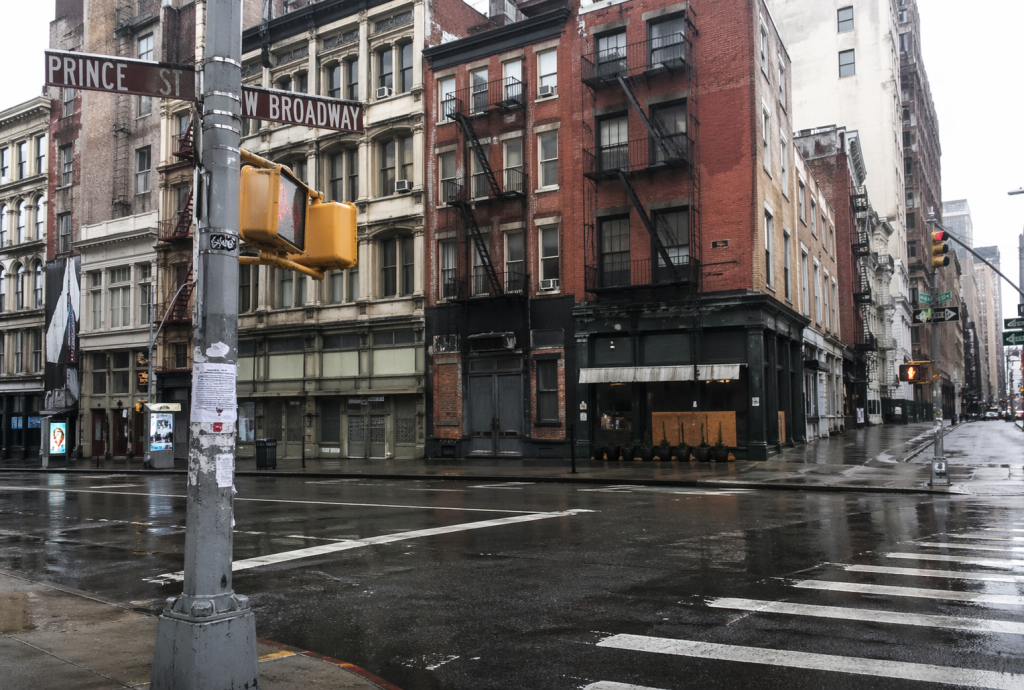
After that, the timeline breaks completely. There are no confirmed details about what happened in the minutes that followed. From a criminology perspective, this is one of the most difficult types of cases — a disappearance that occurs within a very short window, in an open, everyday environment, without clear witnesses to the critical moment.
When concern turned into urgency
When Etan didn’t arrive at school and didn’t return home, his parents began to realize something was wrong. At first, the reaction was natural — maybe he was delayed, maybe something minor had happened. But as time passed, that uncertainty quickly turned into fear.
Police were notified, and searches began in the surrounding area. Neighbors joined in, volunteers spread out, and the community responded as best as it could. For that time, it was a strong effort. But looking back, it’s clear the system wasn’t prepared for a case like this.
The concept of a “missing child emergency” didn’t exist in the way it does today. There were no nationwide alert systems, no standardized rapid-response protocols, and limited coordination between agencies. Much of the response depended on local action and manual investigation.
A case that stretched across decades
The investigation that followed was long, complex, and often frustrating. Hundreds of leads were pursued, witnesses were interviewed, and multiple suspects were considered over the years. The lack of physical evidence made progress extremely difficult.
One of the most frequently mentioned individuals in the case was Jose Antonio Ramos, a man known in the area with a troubling background. While he was long considered a key suspect, there was never enough evidence to secure a conviction against him in connection to Etan’s disappearance.
As the years passed, the case remained open. From a psychological perspective, situations like this create what experts call “ambiguous loss” — a form of grief where there is no clear closure, making it incredibly difficult for families to process what has happened.
A breakthrough — but not a complete answer
In 2012, more than three decades later, the case returned to public attention when Pedro Hernandez was arrested. He confessed to being involved in Etan’s disappearance, a statement that quickly became the center of a highly complex legal process.
The first trial ended without a unanimous verdict. In 2017, after a retrial, Hernandez was convicted of kidnapping and murder.
Even with that conviction, the case still does not offer the kind of closure people instinctively expect. There is no complete physical confirmation, and some questions remain unanswered. For many, this is why the case continues to be discussed and revisited even today.
How one case changed an entire society
Etan Patz’s disappearance had a profound impact on how people in the United States think about child safety. For the first time, the image of a missing child was widely distributed across everyday spaces, including product packaging — something that became symbolic in the years that followed.
From a sociological perspective, this case marked a shift. Communities moved from a general sense of trust toward a more cautious and vigilant mindset. Parents became more protective, and the idea of allowing young children to move around alone began to be questioned in ways it hadn’t been before.
In the years after, organizations dedicated to missing children were created, and cooperation between law enforcement agencies improved significantly. Systems and procedures that are standard today were influenced, in part, by cases like this.
What science tells us about cases like this
Statistically, stranger abductions are rare, but their emotional and societal impact is far greater than the numbers suggest. Psychology explains this through the “availability heuristic” — a tendency for people to overestimate the likelihood of dramatic events because they are more memorable and visible.
In criminology and social studies, Etan Patz’s case is often referenced as an example of how a single event can reshape public perception, behavior, and policy.
A story that never truly ends
Decades have passed since that morning in 1979, but the story hasn’t truly faded. Etan Patz was never found, and that remains one of the most difficult truths of this case.
For his family, and for many others, this is more than an investigation. It became a turning point — a moment when the idea of safety quietly changed.
And maybe that is why the story continues to be told. Because beyond the details, beyond the investigation, it leaves behind a question that still feels uncomfortable: how safe are the places we trust the most?