
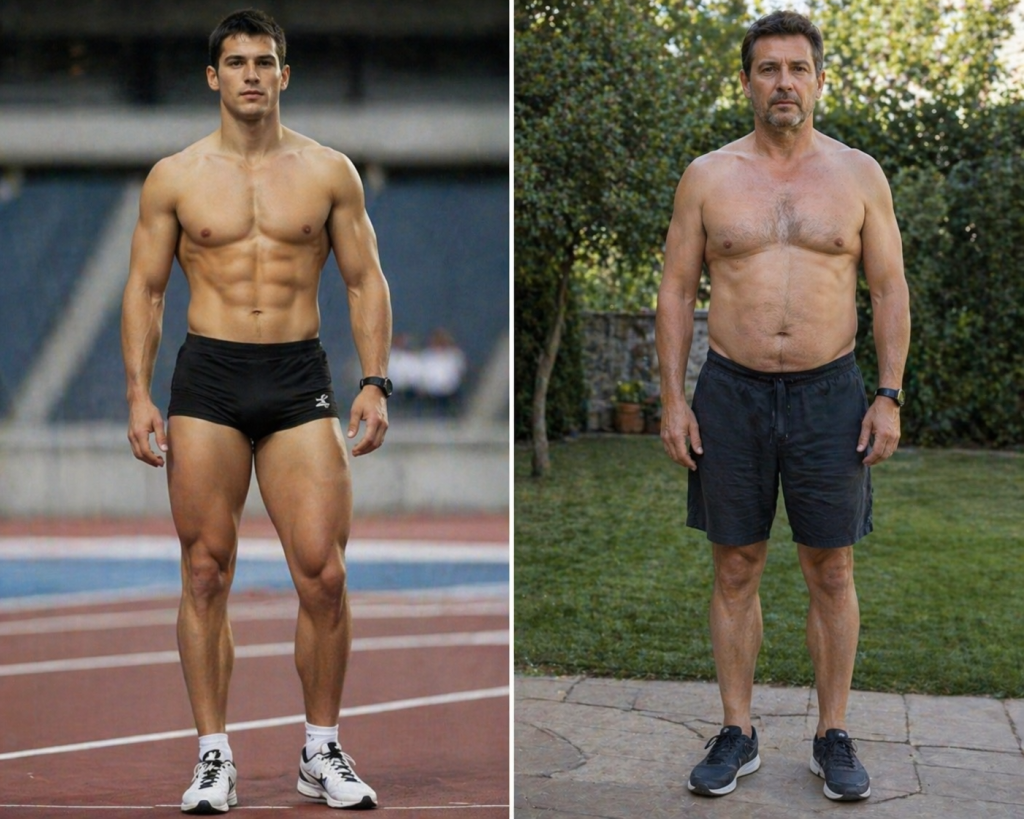
There’s a question that quietly comes up whenever we see a former elite athlete years later: “How come they don’t look like they used to?”
It sounds simple, almost harmless. But underneath it sits a deeper misunderstanding. Because we’re not really comparing the same thing. We’re placing a peak moment—built under extreme, highly controlled conditions—next to a body that has since returned to normal biological rules.
When it comes to names like Nadia Comăneci, that contrast feels even sharper. Not just because of who she is, but because what we remember isn’t just a person—it’s an idea of perfection. And ideas don’t age. People do.
Peak performance was a moment, not a permanent state
An elite athlete’s body isn’t the result of balance—it’s the result of carefully managed imbalance. Years of intense, repetitive training push the body beyond what it would naturally sustain. In sports science, this is often described through cycles of stress and recovery designed to maximize performance.
But those cycles aren’t neutral. Research published in Journal of Applied Physiology shows that high-intensity training consistently creates micro-damage in muscles and connective tissue. The body repairs it—but not always perfectly. Over time, that wear accumulates.
During peak years, you don’t see it. You see control, strength, precision. What stays hidden is the cost.
Elite sport doesn’t “preserve” the skin
There’s a common belief that being highly athletic keeps you young in every visible way. The truth is more nuanced. Moderate physical activity supports skin health. Elite-level training is something else entirely.
Chronic physical stress, oxidative processes, weight fluctuations, and hormonal shifts all affect the skin’s structure. Research in Dermato-Endocrinology highlights how crucial estrogen is for maintaining collagen. After menopause, collagen levels can drop significantly—some studies estimate around a 30% decline in the first years.
There’s no full reset. At best, there’s management.
A detail most people overlook: how little “volume” that body had
In sports like gymnastics, the body is optimized for efficiency: low body fat, controlled muscle mass, minimal weight. It’s ideal for performance.
But over time, that same structure has consequences. With age, the natural loss of tissue volume becomes more noticeable. Less underlying support can make the skin appear thinner or less firm compared to people who never had to maintain such low body fat levels.
It’s not a flaw. It’s the long-term effect of a highly specialized body.
The era they trained in matters more than we think
Top athletes from the ’70s and ’80s trained in a completely different environment than today’s athletes. Daily sunscreen wasn’t standard. Preventive skincare barely existed. Recovery methods were far less advanced.
Repeated sun exposure, intense physical conditions, and limited long-term care don’t show immediate effects. But they accumulate—and they become visible years later, right when comparisons begin.
Personal choice is the part we ignore most
There’s an assumption that if someone has the means, they will automatically “fix” the signs of aging. In reality, many don’t.
Some former athletes choose to age naturally. Others opt for minimal intervention. These are personal decisions, but they’re rarely considered when people compare “then” and “now.”
What actually surprises us
The real surprise isn’t how a former athlete looks today. It’s how used we’ve become to unrealistic images.
We live in a world where faces are filtered, bodies are edited, and aging is constantly softened or hidden. In that context, a naturally aging body can feel unexpected—even though it’s the norm.
The contrast isn’t just between past and present. It’s between reality and a version of it we’ve learned to accept as standard.
What should really stay with us
If you strip away the image, what remains is something harder to ignore: years of discipline, pressure, sacrifice, and the ability to push the human body to limits most people will never reach.
That “perfect” version we remember was never meant to last.
And maybe the better question isn’t why they don’t look the same anymore, but whether we ever understood what it actually took to look that way in the first place.