
There are stories that don’t feel constructed. No dramatic pacing, no carefully placed twists. Just a quiet sequence of events that becomes harder to process the more you understand what actually happened.
This is one of them.
Ann King was 88 years old. She had spent decades working as a nurse, caring for people at their most vulnerable moments. She was, for many families, the kind of person you trust when you can no longer do everything on your own.
In the end, she became the one who needed that same kind of care.
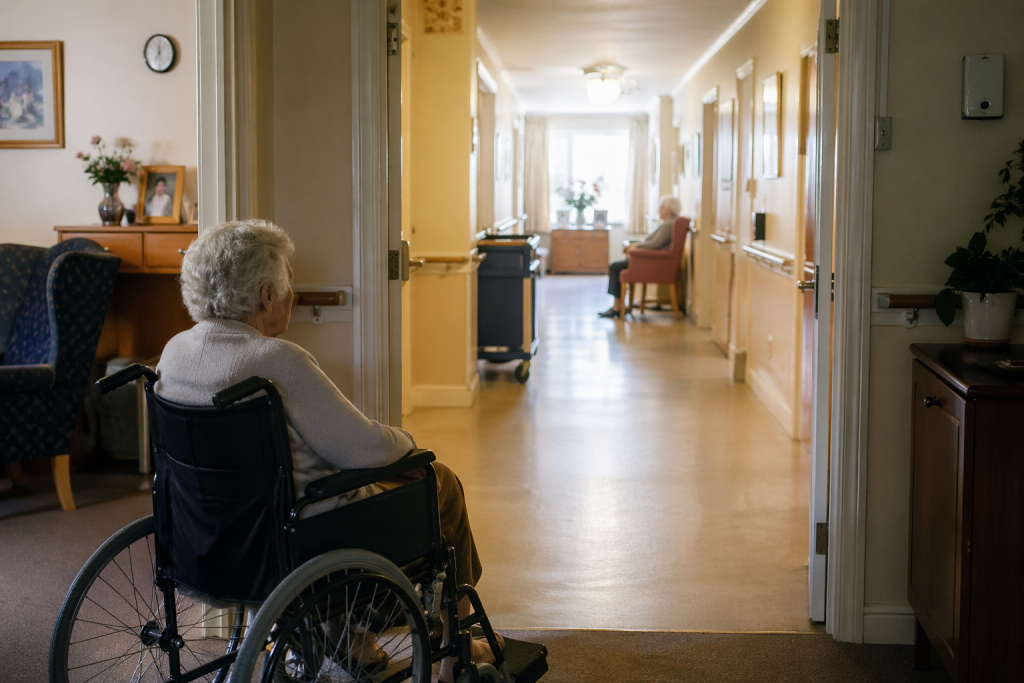
When care at home is no longer enough
Dementia rarely arrives all at once. It slowly reshapes daily life: small memory lapses turn into confusion, familiar places become uncertain, and independence fades in ways that are difficult to accept.
Her family tried to care for her at home for as long as possible. Like many families, they held on until the situation became too complex to manage safely without professional help. The decision to move her into a care home wasn’t easy, but it felt necessary.
They chose a facility that, by all visible standards, seemed right. It was well-reviewed, clean, and expensive — the kind of place that suggests stability and safety.
At first, nothing raised immediate concern.
The small changes that didn’t quite make sense
Over time, subtle signs began to appear. Anxiety where there hadn’t been before. Unexplained fear. Reactions that felt out of place even within the context of dementia.
These are the kinds of changes that can easily be explained away. Dementia itself can account for a wide range of behaviors, and that ambiguity often makes it harder to question what’s happening.
Still, something didn’t feel right.
Instead of ignoring that instinct, the family chose to look deeper.
The decision to install a hidden camera
Installing a hidden camera in a loved one’s room is not a decision made lightly. It sits somewhere between concern and doubt — between trusting what you’ve been told and needing to see for yourself.
But they went ahead with it.
What they later discovered changed everything.
What the footage revealed
The recordings showed a reality that didn’t match the image of professional care.
There were moments of rough handling, a lack of patience, and behavior that stripped away dignity rather than protecting it. When she became confused, she was not always met with calm reassurance, but with irritation or dismissiveness.
There were instances where she was left unattended while clearly in need of help. Times when her attempts to communicate distress were not met with support, but with indifference.
The details are difficult to process not because of a single dramatic incident, but because of the pattern — the repetition of small actions that, taken together, reveal something much more serious.
What happened next
Once the footage was reviewed, the situation escalated quickly.
Authorities became involved, staff members were dismissed, and at least one individual admitted to abusive behavior. The care home issued an apology and offered compensation, which the family declined.
The case drew public attention and raised broader questions about oversight, accountability, and the gap that can exist between appearance and reality.
Why this case resonated so widely
What made this situation particularly unsettling was not only what happened, but where it happened.
This was not an obviously neglected facility. It was a place considered reputable, even high-end. A place families might choose specifically to avoid the kinds of problems they fear most.
It challenged a deeply held assumption: that higher cost and better presentation automatically mean better care.
The underlying vulnerability
Cases like this highlight a difficult truth.
People living with dementia are among the most vulnerable individuals in any care system. They may struggle to communicate clearly, to describe events accurately, or to be believed immediately. Their condition can blur the line between perception and reality, making it easier for serious issues to go unnoticed or unproven.
At the same time, daily life inside care facilities is not fully visible to families. Visits are limited in time and context, and what is seen during those moments may not reflect what happens throughout the rest of the day.
This combination creates a space where problems can exist without being immediately detected.
The question that remains
The case of Ann King is not just about one facility or a single set of individuals.
It points to something broader and more uncomfortable:
How much do we truly know about what happens to the people we care about… when we are not there to see it?