
Eating is one of the simplest things we do every day. Most of the time, we treat it like an automatic routine: we sit down, eat, get up, and move on with the rest of our day.
In reality, behind an apparently ordinary meal, an extremely complex biological process is taking place. Within minutes, the brain, stomach, pancreas, liver, and intestines begin communicating with each other through hormones, enzymes, and nerve signals.
Your body transforms food into energy, materials for repairing tissues, and fuel for every organ.
And it all begins even before the first bite.
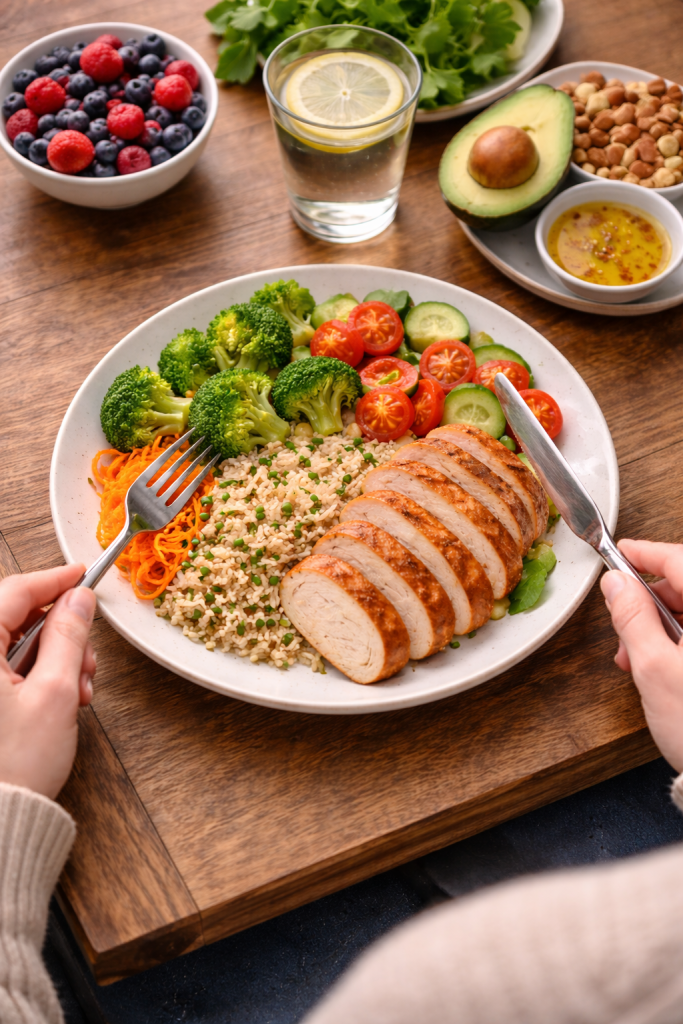
Your Body Prepares Before You Eat
Digestion does not begin in the stomach. It begins in the brain.
When you see food, smell it, or even think about it, the brain activates what scientists call the cephalic phase of digestion. The nervous system sends signals to the stomach and pancreas to begin producing:
- gastric acid
- digestive enzymes
- insulin
This mechanism prepares the body for digestion and helps nutrients be absorbed more efficiently.
In children and teenagers, this response is often stronger because their metabolism is faster and their bodies require more energy for growth and development.
Digestion Begins in the Mouth
The first real stage of digestion takes place in the mouth.
Saliva contains digestive enzymes, especially salivary amylase, which begins breaking down carbohydrates as soon as you start chewing.
Chewing plays several important roles:
- it mechanically breaks food into smaller pieces
- it mixes food with digestive enzymes
- it sends early fullness signals to the brain
This is why doctors and nutritionists often recommend eating more slowly. The brain needs time to receive the signals that the stomach is starting to fill.
The Stomach: Where Food Starts to Transform
After you swallow, food reaches the stomach, where one of the most intense stages of digestion begins.
Here, food meets gastric acid and digestive enzymes. The stomach is not just a passive container — it is a very active organ that contracts rhythmically, constantly mixing its contents.
Several important processes happen here:
- proteins begin to break down with the help of the enzyme pepsin
- gastric acid helps destroy many bacteria that may enter with food
- food is ground and mixed until it becomes a thick, semi-liquid substance
This mixture is called chyme. It is essentially a paste of partially digested food mixed with stomach digestive juices.
The stomach releases chyme gradually into the small intestine in small amounts so digestion can continue in a controlled way.
The Small Intestine: Where Nutrients Are Absorbed
Most digestion and almost all nutrient absorption occur in the small intestine.
Several organs play key roles here:
- the pancreas, which releases digestive enzymes
- the liver, which produces bile
- the gallbladder, which releases bile to help digest fats
In the small intestine, food is broken down completely into its basic components:
- glucose
- amino acids
- fatty acids
- vitamins
- minerals
These nutrients are absorbed through the intestinal walls and enter the bloodstream.
The small intestine has an enormous surface area because of structures called villi. If fully stretched out, its surface could cover about 320–430 square feet (roughly 30–40 square meters) — about the size of a small studio apartment.
Blood Sugar and the Role of Insulin
After eating, the level of glucose in the blood begins to rise.
To keep things balanced, the pancreas releases insulin, the hormone that helps cells take glucose from the bloodstream.
Some of this energy is used immediately, while the rest is stored as:
- glycogen in the liver and muscles
- fat in adipose tissue
In children and adolescents, a larger portion of this energy is used for growth and development.
Why You Sometimes Feel Sleepy After Eating
Many people notice that they feel sleepy after a meal. This sensation has physiological explanations.
After eating, more blood flow is directed toward the digestive system to help process food.
At the same time, increased insulin levels allow an amino acid called tryptophan to enter the brain more easily. Tryptophan is involved in producing serotonin and melatonin, substances associated with relaxation and sleep.
That is why after a large meal many people experience:
- relaxation
- lower energy levels
- mild sleepiness
This effect is especially common after meals rich in carbohydrates.
The Hormones of Fullness
As the stomach fills and nutrients are absorbed, the body begins sending signals that it has had enough.
Several hormones play a role in the feeling of fullness, including:
- leptin
- cholecystokinin (CCK)
- peptide YY
These hormones send signals to the hypothalamus, the brain region that regulates hunger and satiety.
This is why the feeling of “I’m full” usually appears about 15–20 minutes after you start eating.
Differences by Age and Sex
Digestion does not function exactly the same for everyone.
Children and Teenagers
They have a faster metabolism and a higher need for nutrients to support the development of bones, muscles, and the brain.
Adults
Metabolism gradually slows down, and the body becomes more sensitive to excess calorie intake.
Adults Over 60
Production of stomach acid may decrease, which can affect the absorption of certain nutrients such as vitamin B12.
Differences Between Men and Women
In general, men tend to have more muscle mass and higher daily energy expenditure.
Women, influenced by the hormone estrogen, tend to store fat more easily, especially during certain life stages such as pregnancy and menopause.
A Few Hours Later, the Cycle Begins Again
A few hours after eating, blood glucose levels begin to drop.
At that point, the body starts using glycogen reserves from the liver, and the hormone ghrelin begins to rise.
Ghrelin is the hormone that triggers the sensation of hunger.
And so the natural cycle of hunger and fullness begins again — one of the most finely regulated systems in the human body.
A Simple Gesture, an Extraordinary Process
An ordinary meal may seem like a simple act, but inside the body incredibly sophisticated biological processes are taking place.
From the brain signals sent before the first bite to the absorption of nutrients in the intestine, the body transforms food into energy and building materials for every cell.
Every time you eat, your body does far more than just satisfy hunger.
It is, quite literally, fueling your entire life.