
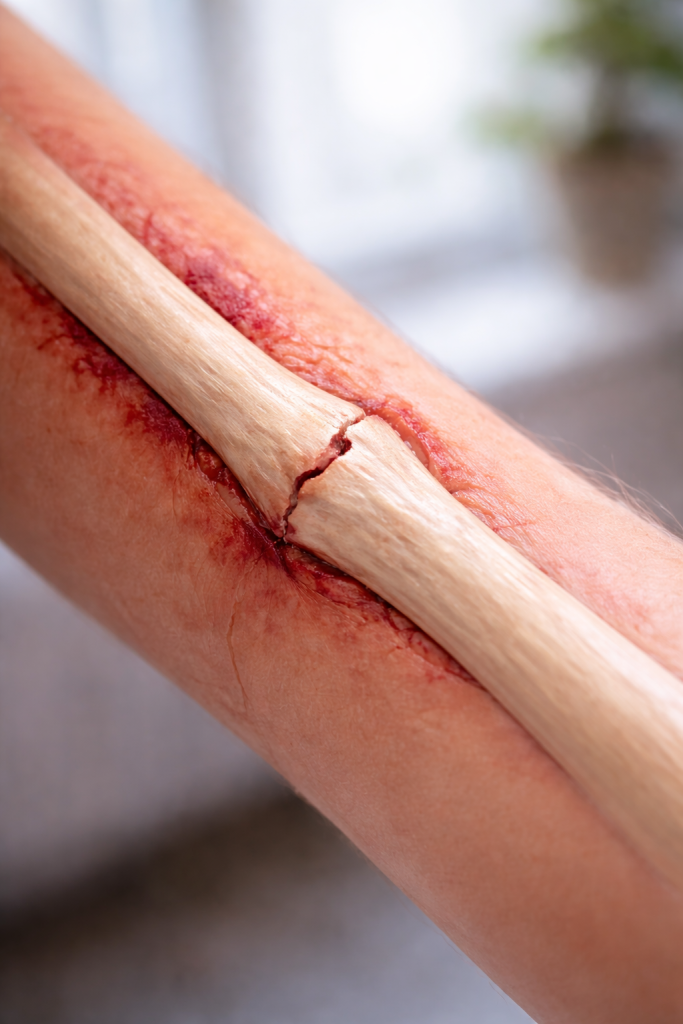
When a bone breaks, it’s not just a rigid structure giving way. In that very moment, your body initiates one of its most organized repair processes. Within seconds, it shifts from injury to action, turning the affected area into a kind of biological construction site where cells communicate, move in, and begin rebuilding what was damaged.
The moment of injury: more than a break
When the fracture occurs, it’s not only the bone that is affected. Blood vessels within the bone and surrounding tissues are also disrupted. This leads to localized bleeding and the rapid formation of a hematoma at the site.
That hematoma is not just a byproduct of trauma—it’s the foundation of healing. It creates the environment needed to recruit repair cells and signals the body to begin the recovery process.
Inflammation: the phase that sets everything in motion
In the hours and days that follow, the body enters an inflammatory phase. The area becomes swollen, warm, and painful—responses that may feel alarming, but are essential.
Immune cells arrive to clear damaged tissue and release signaling molecules that coordinate what comes next. This stage, well understood in physiology, lays the groundwork for rebuilding.
In children, this phase tends to move faster and more efficiently, thanks to a higher regenerative capacity.
Building the bridge: early repair takes shape
After inflammation, the body begins connecting the broken bone ends. At first, this connection is soft, made of fibrous tissue known as a soft callus, which stabilizes the area.
Gradually, this structure is replaced with a harder, mineralized callus. Specialized cells take over the process—some build new bone, while others reshape it. These mechanisms are central to orthopedics and explain why healing is not a simple “joining,” but a full reconstruction.
In adults, this stage takes longer, and in later life it can be influenced by factors such as reduced bone density or conditions like osteoporosis.
Strength returns: the bone becomes functional again
As the hard callus develops, the bone regains stability and begins to handle mechanical stress again. This phase can last weeks or even months, depending on the severity of the fracture and the individual’s overall health.
Nutrition plays a key role here, especially adequate intake of protein, calcium, and vitamin D, all of which support the rebuilding process.
Remodeling: refining the final structure
Even after the bone appears healed, the process continues. The body gradually reshapes the new bone so it more closely resembles its original structure and strength.
In some cases, the repaired area may even become stronger. However, with age—or in certain hormonal conditions, such as reduced estrogen levels in women—this phase can slow down.
Differences between men and women
The overall process is similar, but subtle differences exist. In women, especially after menopause, lower estrogen levels can affect bone density and healing speed. In men, greater initial bone mass may offer some advantage, though recovery still depends heavily on lifestyle and overall health.
The key idea
A bone fracture is not just an injury—it’s the beginning of a carefully coordinated rebuilding process. The body doesn’t simply patch the bone; it reconstructs it step by step, using precise biological mechanisms.
It’s a process that unfolds quietly, often without us realizing it, but it reveals just how capable the human body is when it comes to repairing itself.