
Some of the hardest moments in faith are not the ones when belief disappears.
They are the ones when belief is still there.
You pray. You hope. You are convinced that God can change the situation. And then life keeps moving in a direction you never wanted.
In a testimony titled Adele’s Journey, part of the Christian series Strategies for Strongholds, Adele Newman speaks about an experience that later sparked discussion online. At the center of that discussion is her son, who has Down syndrome, and the spiritual struggle that followed.
A comment shared alongside the video tried to correct an interpretation that had become too simplistic. The story was not about a mother who could not love her child because he had Down syndrome. It was about a mother who loved her son deeply, while also having prayed and hoped for a different outcome.
When that outcome did not come, the question stopped being only about a diagnosis.
It became a question about God.
About prayer.
And about what happens to faith when you believe God can change something, ask Him to do it, and the reality in front of you remains unchanged.
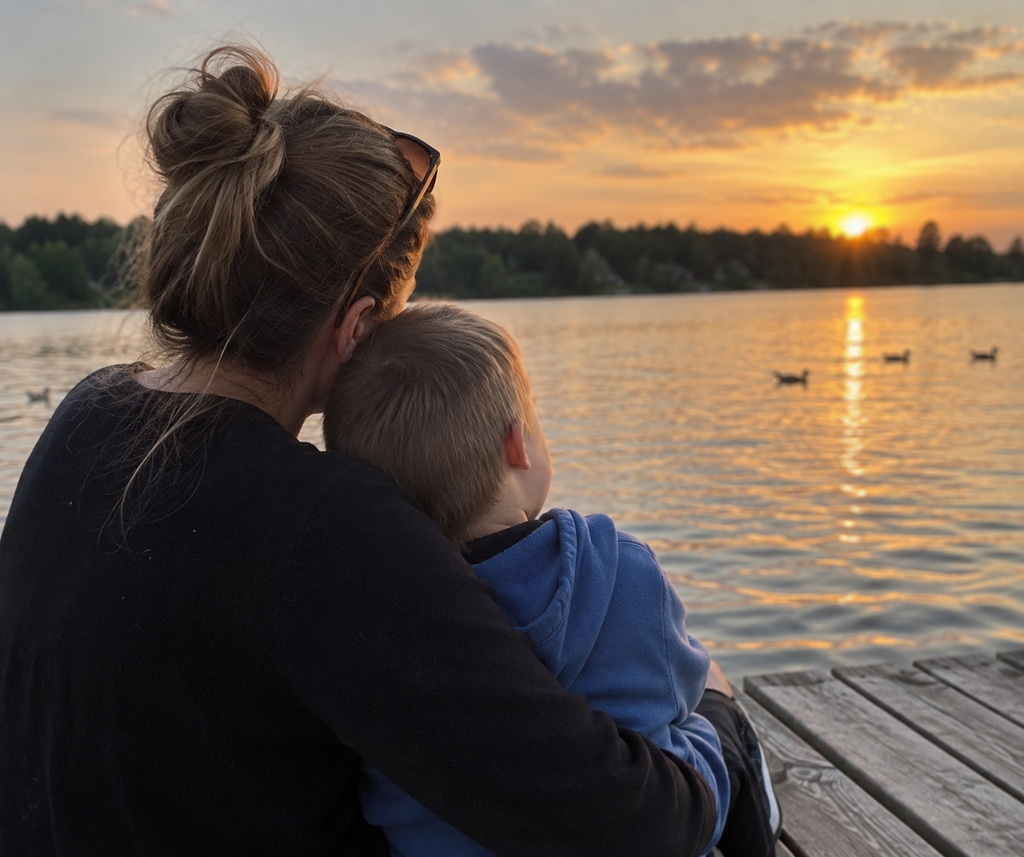
You Can Love Your Child Deeply and Still Mourn the Future You Imagined
This is one of those truths that can be difficult to say out loud without being judged.
A parent can receive an unexpected diagnosis and cry.
They can feel afraid.
They can ask, “Why?”
They can need time to understand what comes next.
None of those reactions automatically mean they love their child any less.
Research involving families who receive a Down syndrome diagnosis often describes an early period of shock, uncertainty, and the need to rebuild expectations for the future. One study used a striking phrase for that process: “rescuing hope.”
Because sometimes what disappears for a while is not love.
It is the script.
Most parents imagine a future for their child long before that future arrives. They picture first words, school, teenage years, independence, perhaps a career or a family of their own.
An unexpected diagnosis can suddenly make that imagined future feel uncertain.
The real child is still there.
And slowly, the parent begins to know that child as they are, rather than constantly comparing them with the child they had unknowingly imagined.
Down Syndrome Is a Diagnosis, Not a Definition
Down syndrome is a genetic condition caused by additional genetic material involving chromosome 21. The most common form is trisomy 21.
People with Down syndrome may have particular developmental needs and a higher likelihood of certain medical conditions. Congenital heart defects, thyroid disorders, hearing and vision problems, and sleep-related issues are among the areas that may require additional medical monitoring.
But there is enormous variation from one person to another.
A genetic diagnosis can tell a doctor important things.
It cannot tell a family who that child will become.
It cannot predict whether they will be quiet or outgoing, whether they will love music, have a wicked sense of humor, be determined, affectionate, stubborn, curious, or unexpectedly talented at something no one thought to look for.
Biology tells us something about a person.
It never tells us everything.
Why the First Words After a Diagnosis Matter So Much
Modern pediatric guidance emphasizes something that may appear small, but represents a major shift in how Down syndrome is discussed.
When parents receive the diagnosis after birth, the conversation should begin by congratulating them on the birth of their child.
Not with “I’m sorry.”
Not with an immediate list of everything that might go wrong.
A child has been born first.
The diagnosis comes second.
Parents need accurate and realistic medical information, of course. But they also need an up-to-date picture of what life with Down syndrome can look like, rather than the outdated stereotypes that once shaped much of the public conversation.
There is a profound difference between saying:
“Your baby has Down syndrome.”
and saying:
“Congratulations on your baby. Your child has Down syndrome, and we are going to talk through what that means and what support may be helpful.”
In the first sentence, the diagnosis can seem to fill the entire room.
In the second, it remains what it should be: an important part of the child’s life, but not the whole of their identity.
Sometimes What Frightens Us Most Is What We Think We Know About the Future
Research on families of people with Down syndrome shows that parental perspectives can change significantly over time.
Many parents describe realizing that some of their earliest fears came from assumptions they held about Down syndrome before their own child became part of their everyday life.
Reality turned out to be more complicated.
There are genuine challenges. Some families deal with significant medical issues, developmental delays, difficulty accessing therapies or educational support, and serious questions about long-term independence.
There is no reason to romanticize those realities.
But the opposite picture — that a family is inevitably destined for unhappiness — is not supported by modern research either.
Stress and joy can exist in the same home.
So can exhaustion and pride.
A child can need more support and still become the center of deeply meaningful relationships.
A life does not have to be free of difficulty to be a good life.
But What If You Prayed for Things to Be Different?
This is where Adele’s story moves beyond Down syndrome.
For a religious person, there is a difference between knowing a situation is difficult and believing that God can intervene in it.
If you have prayed, hoped, and believed that intervention is possible, then questions emerge that medicine cannot answer.
If God can change this, why didn’t He?
If I prayed, why was the answer not the one I asked for?
Did I not have enough faith?
Or did I misunderstand what faith was supposed to mean?
These questions are not new.
They run through the biblical tradition itself.
Job suffers despite being described as a righteous man.
The Psalms contain not only praise, but fear, grief, frustration, and direct questions addressed to God.
The apostle Paul writes about a suffering he repeatedly asked to have removed, yet did not receive the answer he wanted.
And in Gethsemane, Jesus Himself asks that the suffering ahead of Him might pass, before accepting a different path.
Biblical faith does not follow a simple formula in which a good person asks and God always provides exactly what was requested.
It is far more uncomfortable than that.
A Child Should Never Become “The Miracle That Didn’t Happen”
There is, however, an important line that stories like this should not cross.
It is legitimate for a mother to speak about fear.
It is legitimate to admit that she prayed for a particular outcome.
It is legitimate to say that a diagnosis shook her faith.
But a problem arises when the story is framed in such a way that the child with Down syndrome becomes “the miracle that failed to happen.”
For the adult, the hoped-for miracle may have meant the disappearance of a diagnosis.
From the child’s perspective, that language sounds very different.
It suggests that the miracle would have been for them to be someone else.
People with Down syndrome are not imperfect versions of people without Down syndrome.
Research conducted directly with people who have Down syndrome has found that the overwhelming majority of participants described themselves as happy with their lives and said they liked who they were.
That does not mean every person with Down syndrome has an easy life.
No one does.
It means we should be careful about looking at another person’s life from the outside and deciding that because it is different from ours, it must automatically be worth less.
At First, the Diagnosis Can Fill the Entire Room
In the first days or weeks after an unexpected diagnosis, a parent may begin to see the same words everywhere.
Down syndrome.
They search online.
They read about the heart.
Development.
Speech.
School.
Independence.
They wonder what will happen in ten years, twenty years, forty years.
In a handful of sleepless nights, they try to solve an entire lifetime.
Then something ordinary interrupts all of that.
Life.
The baby is hungry.
The baby wakes in the middle of the night.
Cries.
Calms down at the sound of a familiar voice.
Learns something new.
Laughs.
Develops preferences, habits, moods, and a personality so recognizable that the diagnosis can no longer occupy the whole story by itself.
It does not disappear.
But beside it, a person emerges.
Acceptance Does Not Mean You Never Wished Things Were Easier
We sometimes place impossible expectations on parents who receive difficult news.
We expect immediate serenity.
No tears.
No fear.
No words that might sound wrong years later.
But people do not live through major experiences in their final, polished form.
They change.
They learn.
They revise what they thought they understood.
Acceptance does not require erasing the emotions that came first, or feeling ashamed that they existed.
It means reaching a point where the real child no longer has to be measured against an imagined one.
Perhaps that is the deeper meaning behind the idea of “rescuing hope.”
Hope does not always mean getting the original plan back.
Sometimes it means building a new one.
Maybe the Child Was Never the Problem
It would be tempting to end a story like Adele’s with a beautiful line: perhaps her son was the real miracle all along.
But even that may not be the right conclusion.
A child should not have to become a miracle in order to have value.
They do not have to be extraordinary.
They do not have to inspire anyone.
They do not have to make their parents better people or exist to prove something about God.
They are allowed to simply be human.
Perhaps the lesson, if there is one, belongs to the adult.
We struggle to separate hope from the script we have written in our heads.
We say we hope, but sometimes what we really mean is that we want one precise outcome.
We say we have faith, but then discover that we have been measuring God’s goodness by how many prayers end exactly the way we wanted.
And we say we have accepted reality while still comparing the person in front of us with an imagined version of who they were supposed to be.
That may be why stories like this are so uncomfortable.
Not because they offer a simple answer.
But because they leave us with a question.
What happens to love and faith when life no longer resembles the plan we made for it?
For a parent, the answer may come slowly, through thousands of ordinary days.
For a believer, the question goes even deeper:
Can I still believe that God is good when His goodness does not look the way I expected it to?
Perhaps spiritual maturity begins there.
Not when every prayer receives the answer we hoped for.
But when we stop demanding that life become the version we designed in our minds, and finally begin to see the person who is already standing in front of us.