
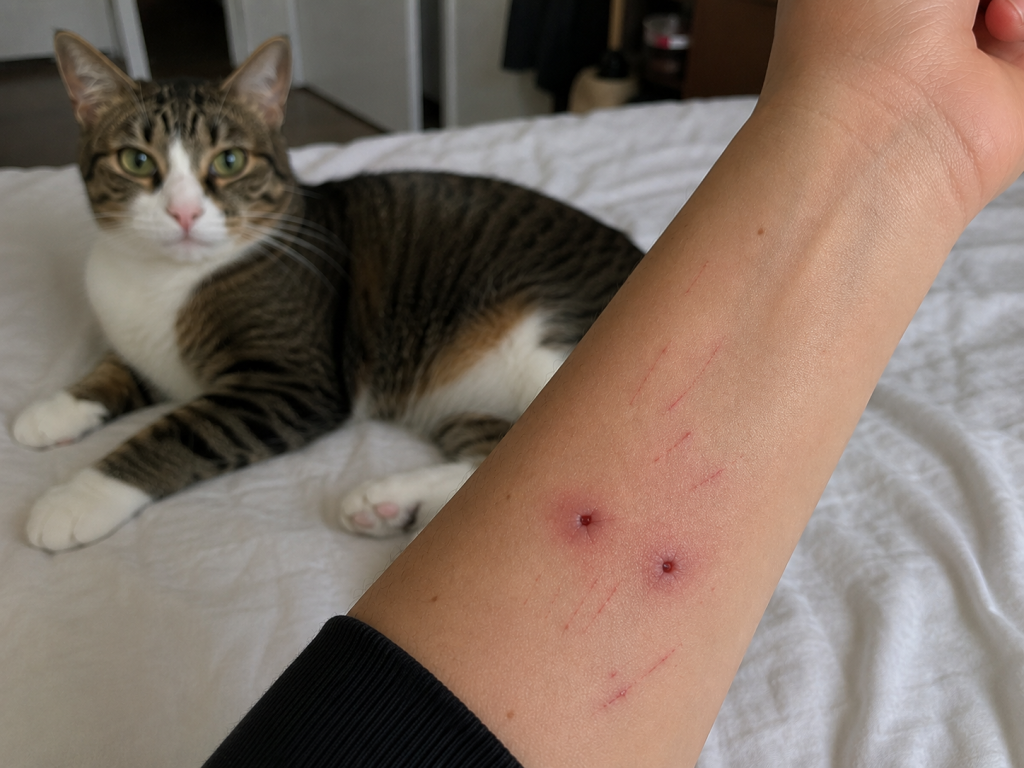
A cat bite often looks harmless. It may leave nothing more than two tiny puncture marks, a little bleeding, and mild discomfort that fades within minutes. Because the injury appears so small, many people clean it quickly—or ignore it altogether—and move on with their day.
Medical experts, however, see cat bites very differently.
Although they rarely cause dramatic external injuries, cat bites are among the animal-related wounds most likely to become infected. In many cases, what looks like a minor puncture on the surface can conceal bacteria deep beneath the skin, where they are much harder for the body’s immune system to eliminate.
This is why healthcare professionals recommend treating every cat bite with caution, even if it initially seems insignificant.
A Small Wound Can Hide a Bigger Problem
Compared with dog bites, cat bites usually appear less severe. Dogs tend to tear tissue, creating obvious injuries that prompt people to seek medical attention immediately.
Cats cause a different kind of damage.
Their long, needle-like canine teeth penetrate deeply into soft tissue while leaving only a narrow opening at the skin’s surface. That tiny puncture can close surprisingly quickly, trapping bacteria inside muscles, tendons, joints, or connective tissue.
The result is an environment where bacteria can multiply unnoticed, sometimes leading to infection before the wound even appears alarming.
Ironically, the injuries that look the least serious are often the ones doctors worry about the most.
Healthy Cats Naturally Carry Bacteria
Many people assume infections occur only when an animal is sick. In reality, healthy domestic cats naturally carry numerous bacteria in their mouths without showing any signs of illness.
One of the best-known bacteria is Pasteurella multocida, which is found in a large percentage of healthy cats. Once introduced beneath the skin, it can trigger pain, redness, and swelling within hours rather than days.
Cat bites may also introduce several other bacterial species at the same time, making these infections more complex than many people realize.
The danger is not that the cat is unhealthy—it is that bacteria perfectly normal for the animal can become problematic once they enter human tissue.
Why Hand Injuries Require Special Attention
Doctors consider bites to the hands and fingers particularly concerning.
The anatomy of the hand leaves very little space between the skin and important structures such as tendons, joints, and bones. Even a shallow puncture can deliver bacteria directly into these sensitive areas.
If an infection develops, it may spread rapidly through tendon sheaths or joint spaces, sometimes limiting finger movement or requiring surgical treatment to remove infected tissue.
For this reason, physicians often prescribe preventive antibiotics for hand bites, even before signs of infection appear.
How Common Are Infections?
Medical studies consistently show that cat bites become infected far more often than dog bites.
Research suggests that roughly one-third to one-half of untreated cat bite wounds eventually develop an infection. Hospital admissions are especially common when the injury involves the hand, where swelling can progress quickly and interfere with normal movement.
These statistics explain why emergency physicians rarely dismiss cat bites as “just a scratch.”
Who Faces the Greatest Risk?
Anyone can develop an infection after a cat bite, but certain individuals are more vulnerable to serious complications.
Higher-risk groups include:
- older adults;
- people living with diabetes;
- individuals with weakened immune systems;
- cancer patients receiving treatment;
- people taking immunosuppressive medications;
- those with chronic liver or kidney disease.
In these individuals, infections may spread more rapidly and become more difficult to control.
Can a Cat Bite Actually Be Fatal?
The short answer is yes—but such cases are exceptionally uncommon.
A cat bite itself is not what threatens life. The danger arises when bacteria spread beyond the original wound and enter the bloodstream, leading to sepsis.
Sepsis is a life-threatening response to infection that can damage multiple organs if not treated promptly. Although modern antibiotics have made these outcomes much less common, medical literature still documents rare cases in which untreated or delayed infections following cat bites resulted in severe complications.
Fortunately, early medical care dramatically reduces these risks.
What You Should Do Immediately After a Bite
If you are bitten by a cat, the first step is simple but important: wash the wound thoroughly with soap and running water for several minutes.
After cleaning the area, apply an appropriate antiseptic and cover the wound with a clean dressing.
Even if the injury seems minor, it is wise to seek medical advice the same day, particularly if:
- the bite is deep;
- it involves the hand, wrist, or face;
- the cat is unfamiliar or its vaccination status is unknown;
- you have diabetes or a weakened immune system;
- redness, swelling, or increasing pain develops.
A healthcare provider can determine whether antibiotics are appropriate, whether a tetanus booster is needed, and—depending on local public health guidance—whether rabies prevention should be considered.
Why Self-Treating Isn’t Always Enough
Because cat bite infections often involve multiple bacterial species, choosing the correct antibiotic is important.
Doctors frequently prescribe medications that cover a broad range of bacteria commonly found in the mouths of cats. In some situations, they may also decide not to close the wound immediately, allowing it to drain naturally rather than trapping bacteria beneath the skin.
Treatment decisions depend on the location of the bite, the patient’s overall health, and how much time has passed since the injury occurred.
Common Misconceptions
One widespread belief is that indoor cats cannot cause dangerous infections.
In reality, the bacteria responsible for most bite-related infections are part of the normal oral flora of healthy cats, regardless of whether they live indoors or outdoors.
Another misconception is that a tiny wound cannot be serious.
With cat bites, the opposite is often true. Their narrow puncture wounds are precisely what allows bacteria to become sealed beneath the skin before the body has a chance to clear them.
People also assume that if the wound does not hurt immediately, everything is fine. However, infections often take several hours to become noticeable, and symptoms may not peak until the following day.
Warning Signs That Should Never Be Ignored
Seek prompt medical attention if you notice:
- increasing redness spreading away from the wound;
- swelling that continues to worsen;
- pus or unusual drainage;
- fever or chills;
- severe or worsening pain;
- difficulty moving fingers or a nearby joint;
- red streaks extending from the bite toward the arm.
These symptoms may indicate that the infection is progressing and requires immediate treatment.
The Bottom Line
Cat bites remind us that appearances can be deceiving. A wound that barely seems worth mentioning may carry a greater infection risk than a much larger injury.
The good news is that serious complications are largely preventable. Prompt cleaning, timely medical evaluation, and appropriate treatment when necessary are usually enough to stop an infection before it becomes dangerous.
If a cat ever bites you, don’t panic—but don’t underestimate the injury either. Sometimes the smallest wounds deserve the greatest attention, and acting quickly can make all the difference.