
In many parts of Eastern Europe, the beginning of March marks the arrival of spring.
In Romania, this moment is celebrated with a small tradition called Martisor.
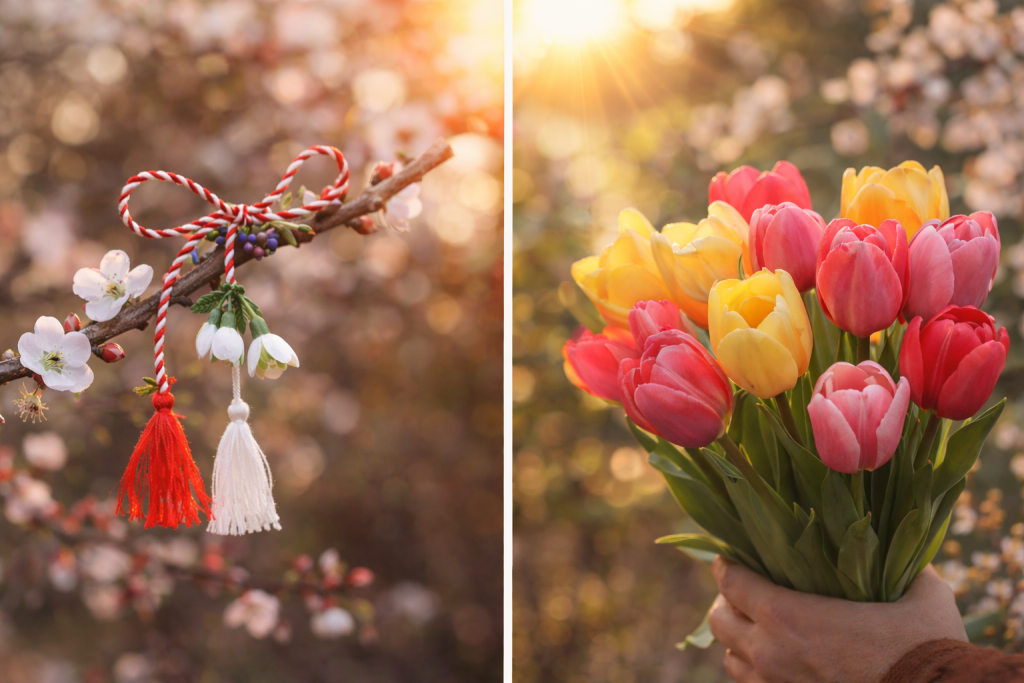
On March 1st, people give each other small decorative charms tied with a red and white string. These charms are worn on clothing, on the wrist, or pinned near the heart.
For many Romanians, this simple object symbolizes the arrival of spring, good luck, and a new beginning.
How old is the tradition?
The exact origin of Martisor is not fully known.
Written descriptions of the tradition appear relatively late, mostly in the last few centuries, in regions that are now Romania, Moldova, and Bulgaria.
However, archaeologists have discovered very old ornaments and amulets in Romania, some dating back 7,000–8,000 years, in archaeological sites such as Schela Cladovei along the Danube River.
These ancient objects were made from:
- small stones
- bones
- shells
Some of them contained traces of red and white pigments.
But it is important to be precise:
archaeologists do not claim these objects were Martisor charms.
The connection is a later cultural interpretation, mainly because red and white appear frequently in ancient symbolism related to life, protection, and renewal.
What do the colors mean?
In many European traditions, the two colors have strong symbolic meanings:
- red represents life, vitality, and protection
- white symbolizes light, purity, and new beginnings
Because of this, the red-and-white string is often interpreted as a symbol of the transition from winter to spring.
However, historians emphasize that this interpretation is symbolic rather than a proven ancient origin of the modern tradition.
How the charm is worn
Traditionally, Martisor charms are worn for several days or weeks after March 1st.
In older Romanian customs, people would wear the red-and-white string:
- on the wrist
- around the neck
- or pinned to clothing.
In some regions, men and children also wore them, not just women.
After the first flowers appear or the first trees begin to bloom, the string is often tied to a branch. This gesture symbolizes good luck and the renewal of nature.
What happens on March 8th
About a week later comes March 8th, known internationally as International Women’s Day.
The holiday began in the early 20th century within movements advocating for women’s rights and equality.
In 1910, German activist Clara Zetkin proposed the idea of an international day dedicated to women, and in 1977 the United Nations officially recognized March 8th as International Women’s Day.
Why March 8th is also seen as Mother’s Day in Romania
In Romania, March 8th has taken on an additional meaning.
For many people, it is also celebrated as Mother’s Day.
In schools and kindergartens, children often prepare:
- handmade cards
- poems
- flowers or small gifts for their mothers.
Although Romania officially celebrates Mother’s Day later in the year (in May), the March tradition remains very strong.
For many families, March 8th is still the day when mothers receive flowers and appreciation.
A small object with a long cultural story
Today, a Martisor charm may look like a simple decorative accessory.
But behind it lies a mix of traditions:
- seasonal customs connected to the arrival of spring
- symbolic meanings associated with life and renewal
- and modern celebrations of women and family.
And perhaps that is why the tradition has survived for so long.
Every year, at the beginning of March, it reminds people that winter is ending and a new season is beginning.