
I’m the kind of person who doesn’t overthink throwing food away when it doesn’t feel right. It’s not just about products that are past their date; sometimes I’ll discard something that is still within its stated shelf life if the smell seems slightly off, if the texture feels different than it should, or if I simply have that subtle sense that something isn’t quite right. I don’t test it, I don’t try to “see if it’s okay,” and I don’t negotiate with doubt. If I don’t trust it, I’d rather throw it away.
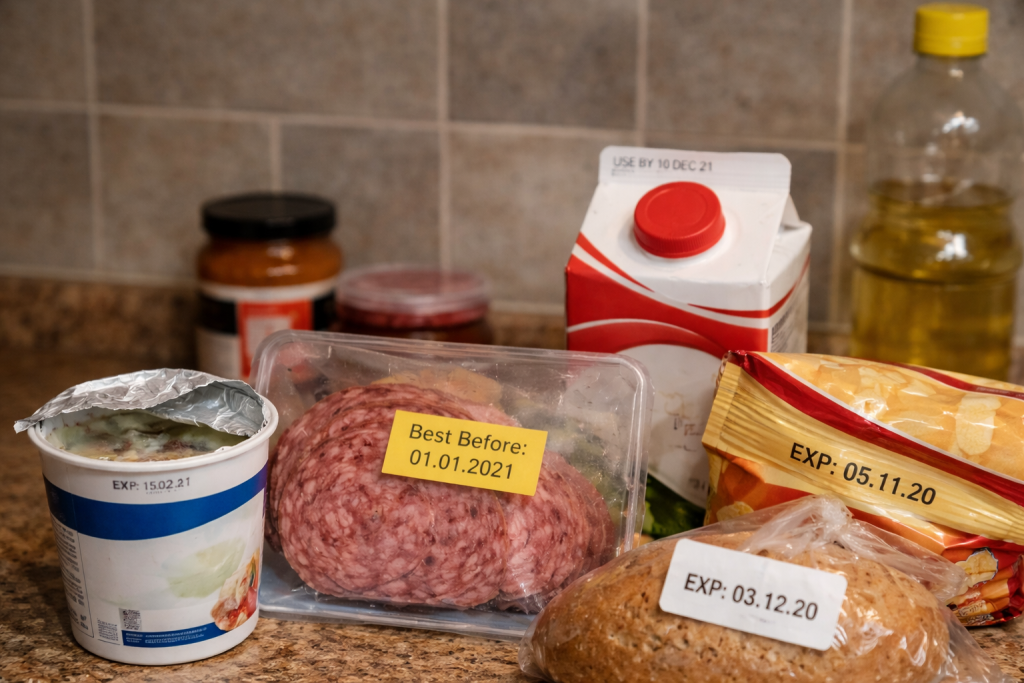
Maybe that’s exactly why what happened one ordinary day stayed with me longer than I expected.
I was visiting someone in what felt like a completely normal setting. The table was set, the food looked good, the atmosphere was relaxed, and nothing about the situation raised any concerns. I ate without analyzing anything, without checking labels, without thinking beyond the conversation happening around the table.
Everything remained that way until, almost instinctively, I glanced into the trash. It wasn’t a deliberate search, more like a reflex or a passing curiosity, but that’s when I noticed the packaging. And on that packaging, the date.
It had already passed.
Not by a day or two.
In that moment, my reaction wasn’t really about the food itself. I wasn’t immediately thinking about risks or consequences. What I felt was a deeper discomfort, one that had more to do with losing control than with what I had actually eaten. The realization that I had consumed something I would never have chosen on my own, without knowing it, shifted my entire perception of the experience.
Nothing happened. I didn’t get sick, and there were no visible consequences. And yet, the feeling stayed.
Because, in reality, the conversation about expired food is not just about food safety. It’s about how each of us defines what “safe” actually means.
Between instinct and the label
There are many people who do not see the date printed on packaging as a strict boundary, but rather as a guideline. For them, evaluating food begins with the senses: how it looks, how it smells, how it tastes. If all of these seem normal, then the product is considered acceptable to consume, even if it has passed the date on the label.
This approach is not necessarily careless or uninformed. In many cases, it reflects a more deliberate relationship with food overall. People who think this way often organize their fridge carefully, rotate products, avoid opening new items before finishing what they already have, and shop more intentionally.
Underlying this mindset is often a desire to avoid waste. In a world where enormous amounts of food are discarded, throwing something away solely because of a printed date can feel unnecessary, especially when there are no obvious signs of spoilage.
The limits we don’t negotiate
On the other hand, there are people for whom expiration dates carry a much stronger meaning. The moment a product is past that date, it is no longer perceived as safe, regardless of how it looks or smells.
This reaction is not simply irrational, even if it is sometimes described that way. It reflects a different relationship with the idea of safety. For some, the fact that a product is expired is enough to exclude it entirely, even if, objectively, it might still be acceptable.
At its core, this is a personal boundary. And personal boundaries don’t need scientific justification to be valid.
When the choice isn’t yours
The real difference appears when you are no longer the one making the decision.
When you choose for yourself whether to eat something or not, you are consciously accepting or avoiding a certain level of risk. However, when you find out afterward that you have eaten something expired without knowing it, the situation takes on a completely different dimension.
It is no longer just about the food.
It becomes about trust.
For many people, the discomfort doesn’t come from the possibility that the product might have been unsafe, but from the fact that they didn’t have the chance to choose. They trusted the situation, they ate without hesitation, and only later discovered that reality was different from what they believed.
That shift, subtle as it may seem, changes everything.
What “expired” actually means
From a scientific perspective, the reality is more nuanced than it appears at first glance.
Not all dates on food packaging indicate the same type of limit. Phrases like “best before” are generally related to quality, not safety. After that date, the product may still be safe to consume, but it might not retain the same taste, texture, or performance.
In contrast, “use by” dates are more closely associated with safety, especially for perishable foods such as meat, fish, and certain dairy products.
The type of food also plays a crucial role. Dry or shelf-stable products can last much longer if stored properly, while foods with higher moisture and protein content are far more susceptible to spoilage.
There is also an important detail that is often overlooked: not all harmful bacteria change the smell or appearance of food, which means that relying solely on sensory evaluation is not always sufficient.
Between waste and caution
In the end, each of us finds ourselves navigating between two opposing forces: the desire to avoid waste and the need to feel safe.
Some people rely more on their senses and experience, while others prefer to follow the label strictly. There are those who are willing to take small risks for themselves but would never do so when it comes to children, and there are those who simply cannot get past the idea at all, regardless of context.
There may not be a universally correct answer.
But there is one question that changes the perspective:
Would your reaction be the same if you didn’t know the food was expired?