
We’ve all experienced this strange contradiction.
You can sit in a barber’s chair while several inches of hair are cut away without feeling a thing. Yet accidentally pull out a single strand, and the sharp sting is impossible to ignore.
It seems to make no sense. If pulling a hair hurts, shouldn’t the hair itself be alive?
The answer is both simpler and more fascinating than most people realize.
The Hair You See Isn’t Alive
Every strand that hangs from your scalp is made of cells that have already completed their life cycle. As they formed, these cells gradually filled with keratin—a strong structural protein—and lost their nucleus along with every other living component.
By the time the hair emerges from the skin, it contains no nerves, no blood vessels, and no living cells.
That’s why getting a haircut is completely painless. You’re trimming a structure that is already biologically dead.
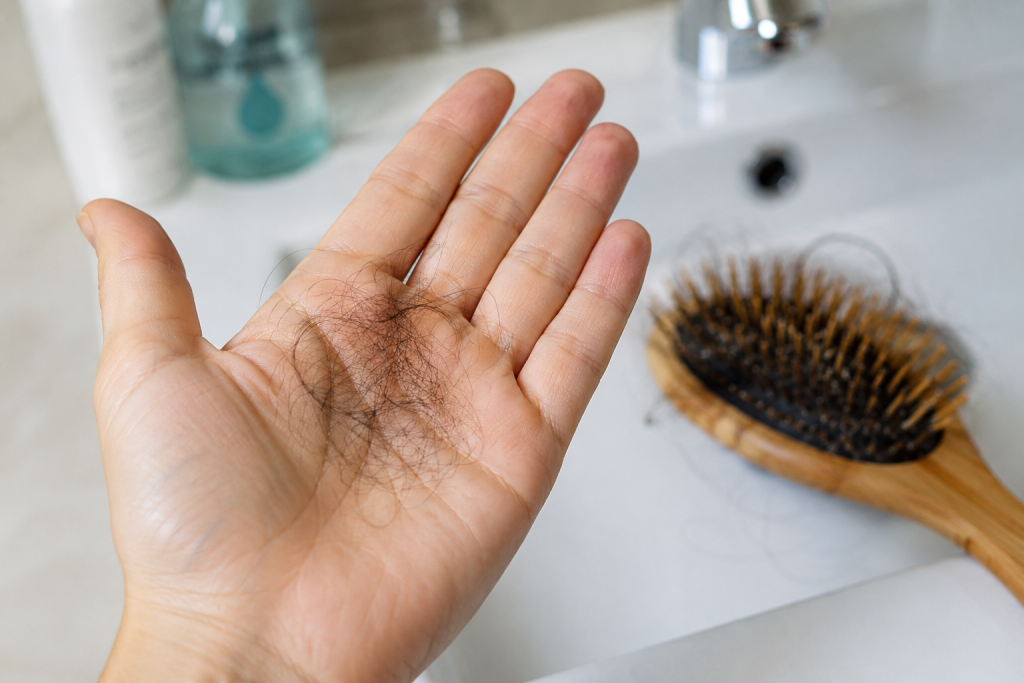
So Where Does the Pain Come From?
The pain has nothing to do with the hair shaft itself.
Each strand is anchored deep inside the skin within a tiny structure called a hair follicle. Surrounding that follicle are sensory nerve endings that are remarkably sensitive to movement.
Their job is to alert your brain whenever something brushes against your skin or disturbs the hair.
When a hair is pulled out by its root, those nerves are suddenly stretched and stimulated. The brain interprets those signals as pain.
In other words, you’re not hurting the hair.
You’re hurting the living tissue that holds it in place.
That’s also why plucking eyebrows, waxing, or pulling out a beard hair feels so different from simply cutting hair with scissors.
Hair Starts Its Life Alive
Although the visible strand is dead, its story begins in living tissue.
At the base of every follicle, specialized cells divide rapidly to produce new hair. As these cells move upward, they gradually harden, fill with keratin, lose their internal structures, and eventually die.
The strand that you brush every morning is actually the final stage of a process that began with living cells beneath your skin.
Can Hair Really Repair Itself?
Many hair products promise to “repair damaged hair” or “restore hair from within.”
In reality, dead tissue cannot heal the way living skin does.
Conditioners, masks, and serums can smooth the outer layer of the hair, reduce breakage, improve shine, and make damaged strands appear healthier. What they cannot do is bring dead cells back to life.
Think of it like polishing a piece of wood. The surface can look dramatically better, but the material itself hasn’t become alive again.
Healthy Hair Begins Below the Surface
If the visible strand is already dead, then the real key to healthy hair isn’t found at the ends—it’s found beneath the scalp.
A balanced diet rich in protein, iron, zinc, and essential vitamins, along with proper scalp care and treatment of underlying scalp conditions, supports the follicles that produce future hair growth.
The healthiest-looking hair usually starts long before it becomes visible.
One of the Body’s Most Surprising Facts
Hair is one of the most defining features of our appearance, yet the part we spend the most time styling, coloring, and protecting is made entirely of dead cells.
Ironically, that’s exactly what allows us to cut, straighten, curl, or dye our hair without pain.
The next time someone jokes that their hair is “dead,” they’re technically correct. The real living part has always been hidden beneath the surface, quietly creating the next strand long before it ever sees the light of day.