
Some stories in nature feel almost impossible, even when they are true. This is one of them.
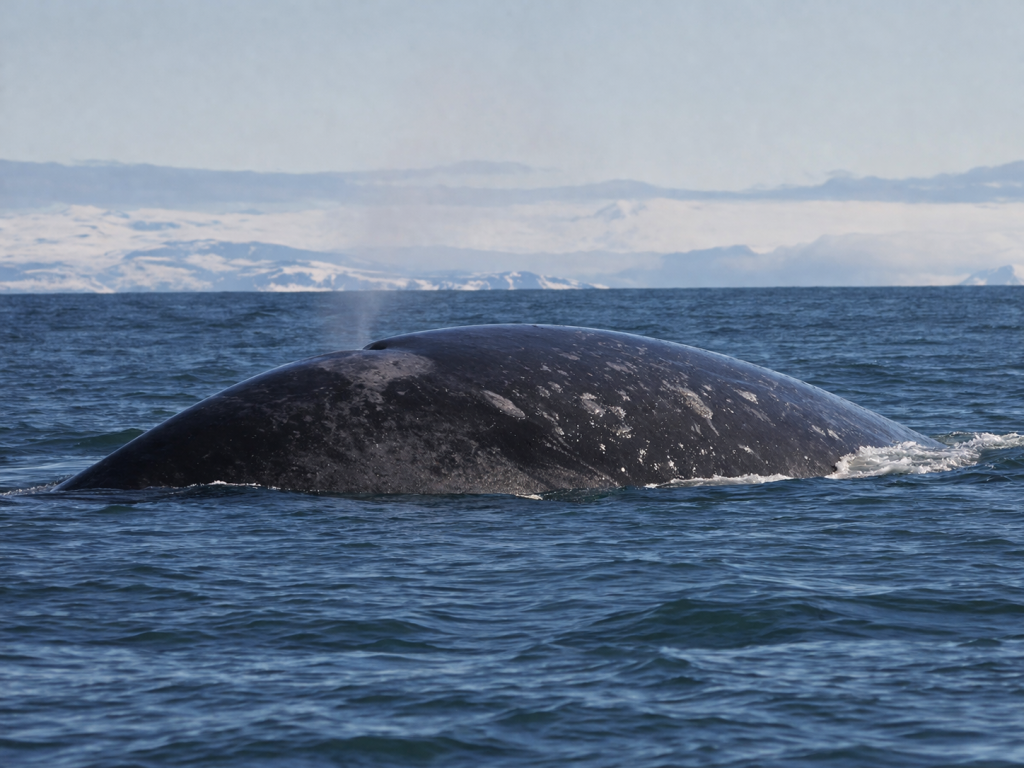
It begins like many others — with a whale in the cold, remote waters of the Arctic. Nothing unusual at first glance. Just another massive animal surfacing quietly in a place where humans rarely look twice.
But this one was carrying something unexpected.
Embedded deep in its body was a piece of metal — the tip of a harpoon, the kind used in the 1800s, during the height of commercial whaling. Not a recent injury. Not something that had happened years ago.
More than a century earlier.
Which means this animal had not only survived the attack, but had lived long enough for the wound to heal around it, turning a moment of violence into something its body simply absorbed over time.
This isn’t just resilience.
It’s a completely different scale of life.
A lifespan that reshapes what we think is possible
The species behind this discovery is the bowhead whale (Balaena mysticetus), a creature perfectly adapted to some of the harshest conditions on Earth. It spends its life in Arctic waters, where ice, darkness, and extreme cold define the environment.
And yet, it holds a record that few animals come close to.
Scientists estimate that bowhead whales can live well beyond 150 years, with some individuals exceeding 200. These estimates aren’t based on guesswork alone. Researchers analyze changes in the proteins of the eye’s lens — a biological timeline that accumulates over life.
The harpoon, in this case, didn’t establish the age on its own. It confirmed it in the most tangible way possible.
This whale had been alive long before the modern world took shape.
Built to endure
Such longevity isn’t accidental. It’s the result of a biology that operates differently from most mammals.
Bowhead whales have a slow metabolism, shaped by the cold environment, which reduces the rate of cellular damage over time. Genetic studies suggest they possess highly efficient DNA repair mechanisms and an unusual resistance to cancer — a remarkable trait for an animal of such size.
Their thick layer of blubber, sometimes reaching tens of centimeters, acts as both insulation and an energy reserve, allowing them to survive long periods with limited food.
They grow slowly. They mature late. Everything about their life unfolds over decades.
Time, for them, moves differently.
Bodies that remember
Whales don’t just live long lives — they carry evidence of those lives with them.
Their bodies often bear scars from encounters with predators like orcas, marks from ship strikes, or traces of past injuries that have long since healed. In rare but documented cases, like this one, they even carry remnants of human tools embedded in their flesh.
The wound doesn’t stay open.
The body adapts. Heals. Continues.
And what once was a threat becomes part of the animal’s story.
Giants that quietly shape the ocean
When we think of whales, size is often the first thing that comes to mind. And for good reason.
The blue whale (Balaenoptera musculus) is the largest animal known to have ever lived — larger than any dinosaur. Its heart can weigh as much as a small car, and yet it feeds almost entirely on tiny organisms like krill.
But beyond their size, whales play a crucial role in ocean ecosystems. They help circulate nutrients, support marine food chains, and even influence carbon cycles in ways scientists are still trying to fully understand.
They are not just part of the ocean.
They help regulate it.
More than instinct
Research over the past decades has revealed something even more compelling: whales are not simple creatures driven only by instinct.
Some species produce complex vocalizations that can travel across vast distances, changing over time in patterns that resemble cultural transmission. There is evidence of social bonds, cooperation, and behaviors that suggest a deeper level of awareness.
In other words, these are not just long-lived animals.
They are long-lived beings with complex lives.
A story that stretches beyond a lifetime
The whale that carried a harpoon is more than a scientific curiosity.
It is a reminder of how different nature’s timeline can be from our own.
While generations of humans came and went, while technology advanced and entire eras passed, that animal continued to move through the ocean, carrying within it a fragment of a world that no longer exists.
And maybe the real question isn’t how long these whales can live.
But how much of life we still don’t understand.